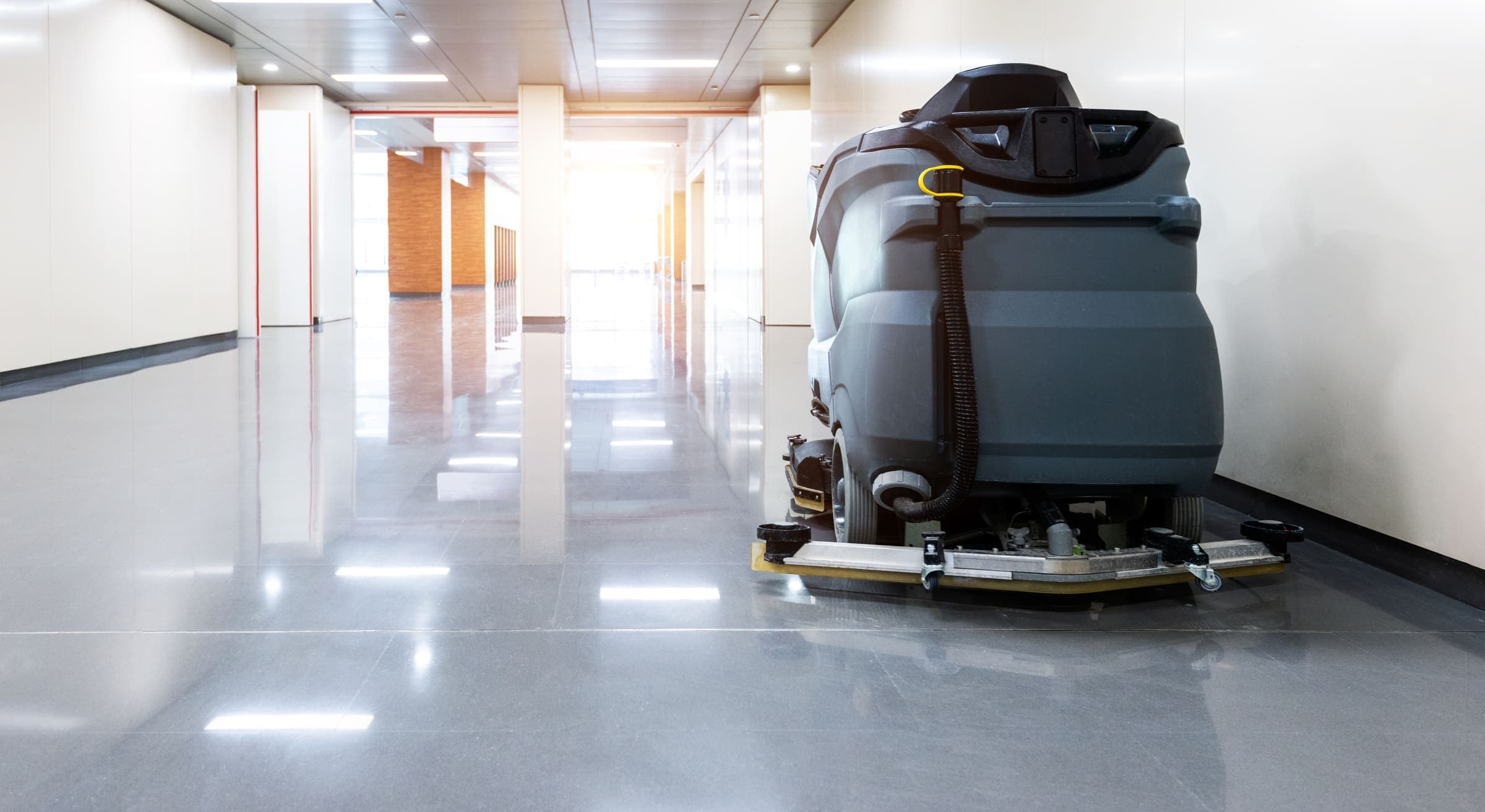
The best office cleaning is the kind nobody sees happen. Crews come in after the floor empties, do the work, and leave the building ready for the next morning — no vacuums during meetings, no carts in the hallway at 2 p.m. But "after hours" raises three practical questions every office and property manager should ask before signing: when, who has access, and what exactly gets done.
Here's how after-hours office cleaning works across the Salt Lake metro, from downtown high-rises to the tech offices along the Lehi–SLC corridor.
After-hours nights vs. a day porter
The core of most office contracts is after-hours cleaning — crews working evenings, on the schedule your building actually needs (not every office needs five nights a week). That covers trash, restrooms, common areas, kitchens and breakrooms, and floors on rotation, done while the building is empty.
Busy buildings add a day porter on top: daytime staff who keep lobbies, multi-tenant common areas, and restrooms presentable through peak hours. The pattern that works for most offices is after-hours crews doing the deep nightly work, with a day porter where foot traffic would otherwise degrade the space by mid-afternoon.
How building access and security actually work
After-hours cleaning means handing a vendor access to an empty building, often with sensitive workspaces inside. A professional vendor treats that as a security responsibility, not a logistics detail. Before you sign, get clear answers on:
- Access method — keys, fobs, badges, or codes — and how they're issued, tracked, and returned.
- Alarm arming and disarming procedures, and who's accountable if the building is left unsecured.
- Crew consistency: a stable, vetted team in your building, not a rotating cast of strangers each week.
- How after-hours coverage works in a multi-tenant building where suites have different access rules.
What belongs in the scope
A clear office scope spells out what happens every visit versus on rotation, so nothing is assumed. Typical recurring work includes:
- Trash and recycling, restroom service and restock, kitchen and breakroom cleaning every visit.
- Vacuuming, hard-floor mopping, glass, and high-touch surfaces nightly.
- Carpet spot-cleaning ongoing, with periodic extraction and hard-floor strip-and-wax on a rotation.
- A lights-out walkthrough so the building is secured and ready for the morning.
- Supplies and consumables — paper, soap, liners — tracked and restocked as part of the contract, not billed as surprises.
What's specific to the SLC market
Two things shape office cleaning across the Wasatch Front. Downtown Salt Lake City's multi-tenant towers mean coordinating access and common-area responsibility across suites and building management. And the tech-office corridor from Salt Lake City down through Sandy, Draper, and Lehi tends to run modern open-plan space with kitchens, collaboration areas, and glass everywhere — which rewards a vendor whose crews are based locally and can keep response times tight rather than dispatching from a single central yard.
After-hours cleaning is mostly invisible when it's done right — which is exactly why the access, consistency, and scope questions matter most. Get those settled up front and the rest takes care of itself, night after night.